01 / OPEN THE POSSIBILITIES
Before choosing a silhouette
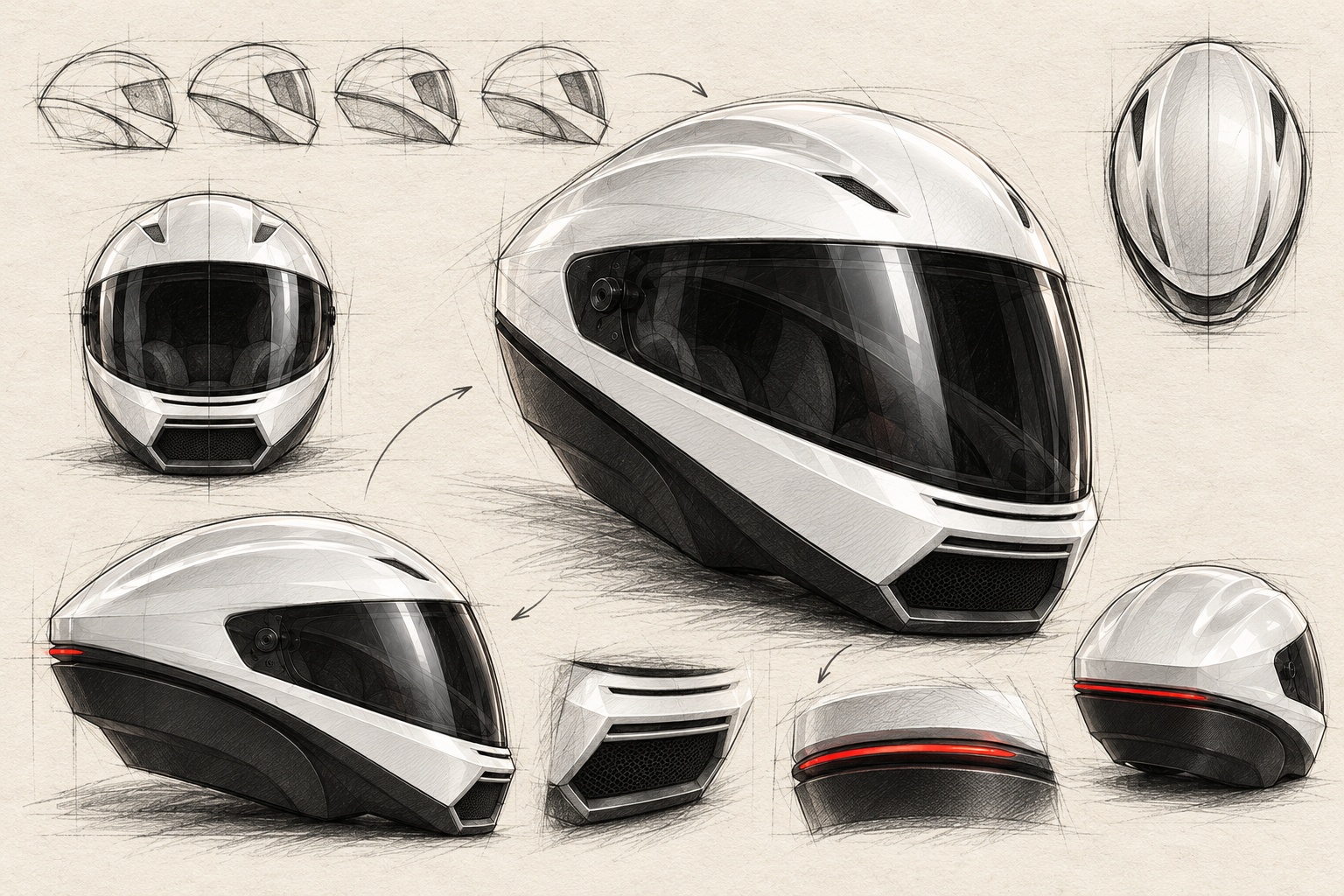
Explore the visor opening, crown volume and rear length through loose pencil alternatives. Construction lines help compare the same idea from different angles.
 D8SIGN.STUDIO
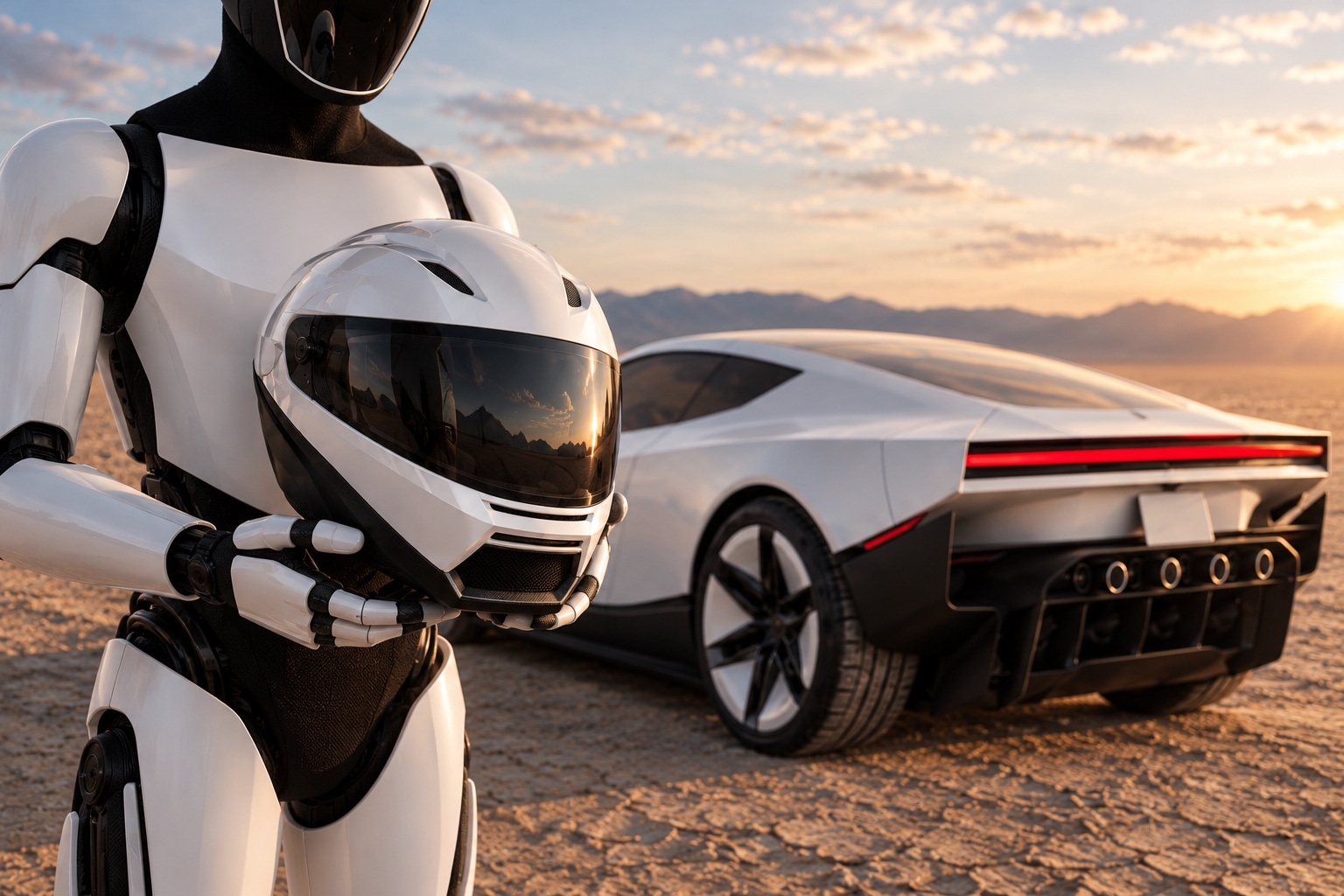
A DESIGN EXPLORATION BY THE D8SIGNER
A new horizon for mobility.
A personal vision for HJC.
01 / THE QUESTION
A spectacular new movement.
A very human design question.
The Roadster’s aerial ambitions sparked this personal exploration: if a vehicle changes direction abruptly, how might the experience feel inside? I imagined a helmet as a companion to that extreme journey — an object that connects the visual identity of the car with a question about the person travelling in it.
The starting hypothesis is a mismatch between extraordinary motion and the familiar cockpit experience. It is a design provocation to investigate, not an established failure diagnosis. The helmet explores head coverage and fit; it does not claim to solve acceleration loads or replace an integrated occupant-restraint system.
THE SPARK / A LITTLE HUMOUR
This short, user-supplied clip turns an exaggerated ride into a useful creative question. The humour opens the brief: consider the head, the cockpit and the experience together.
Illustrative humorous scenario, not vehicle test footage. Context: Roadster reveal, Reuters, 15 October 2026 ↗
02 / THE HELMET
White sculpted surfaces. A panoramic dark visor.
A single red line that ties the story together.
One concept, seen as a whole. AI-assisted finish visualization based on the supplied model references.
DESIGNED TO BE CONSIDERED
A broad, raked visor defines the face of the concept. Fine perimeter seals and an inner anti-fog lens are explored as part of its visual detailing.
Contoured cheek pads, perforated textiles and a soft neck roll translate the calm, sculpted feeling of an automotive interior into the helmet’s inner world.
Crown channels and a recessed chin intake bring a technical rhythm to the clean shell. Their placement is a design proposal; airflow remains a future engineering question.
The fine red rear light echoes the vehicle’s continuous lighting line. It is a visual connection between two objects imagined as part of the same journey.
03 / FROM INTUITION TO FORM
Draw it. Question it. Build it.
Then look again.
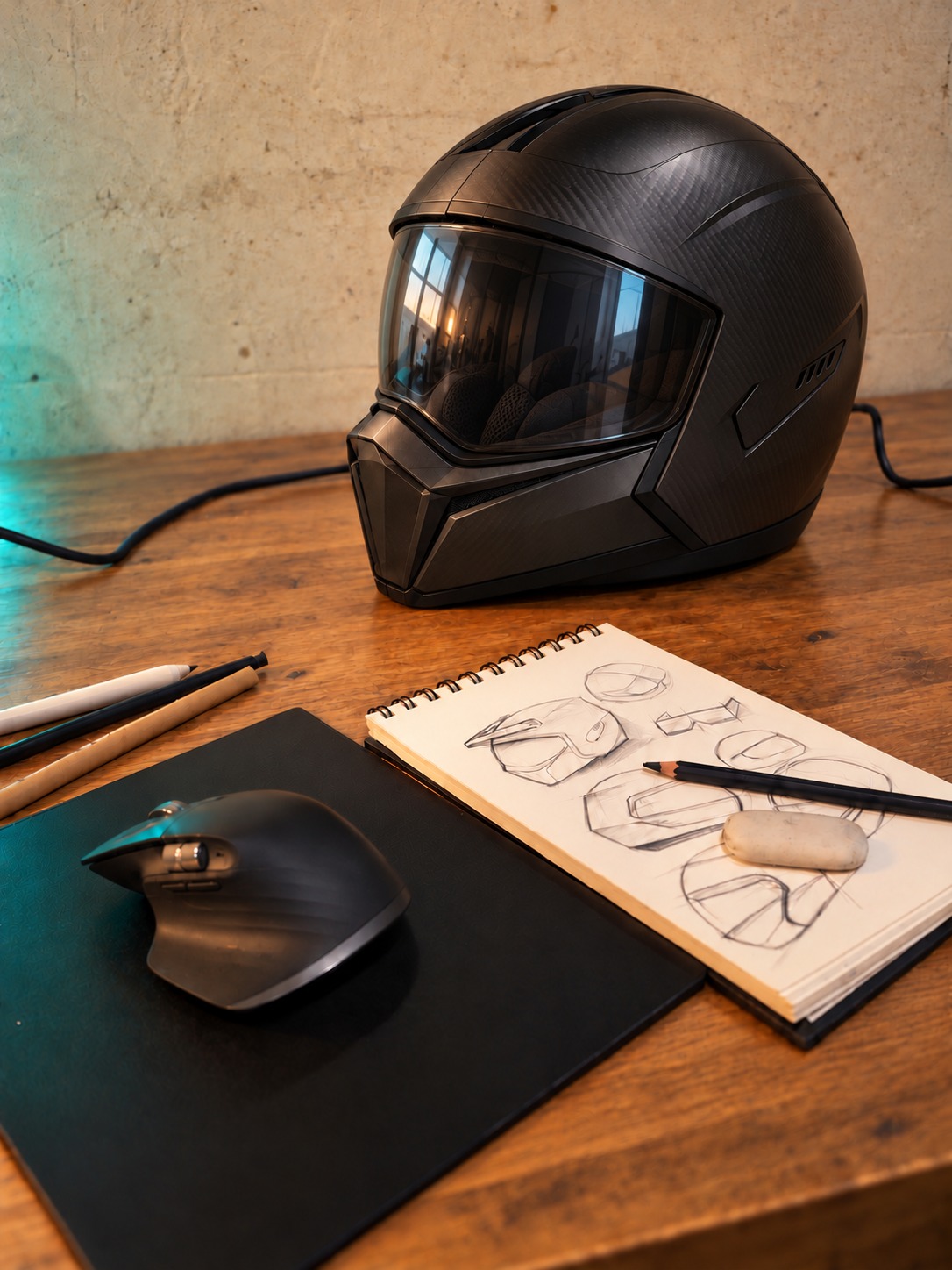 01 / REFERENCE-LED IDEATION
A familiar object gives the first questions something tangible to work against. Observe the proportions, sketch alternatives and explore the relationship between the crown, visor and chin.
Reference, pencil and observation: the starting point for a new direction. Studio scene shown as an AI-assisted illustration of the approach.
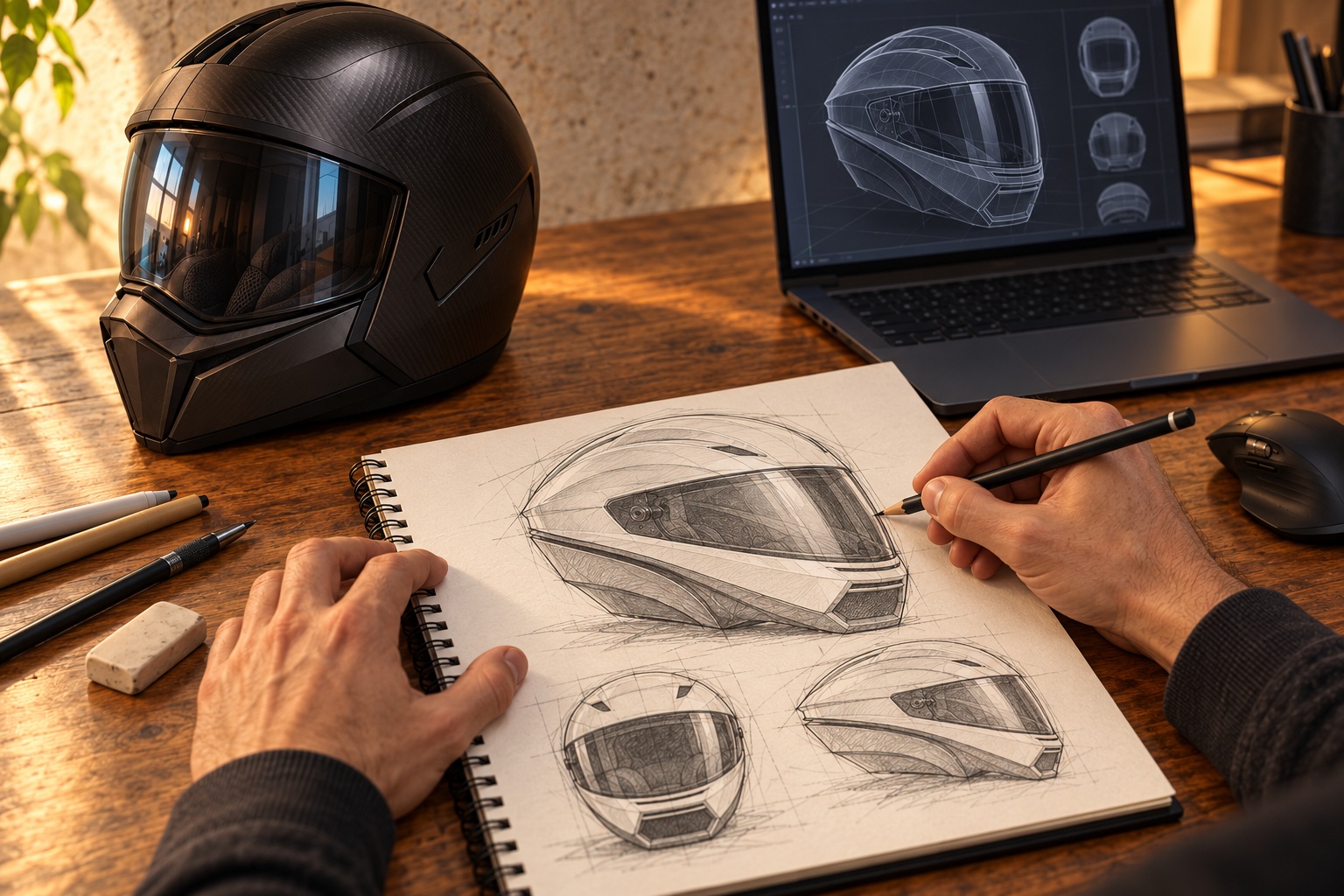
01B / DESIGN SYNTHESIS
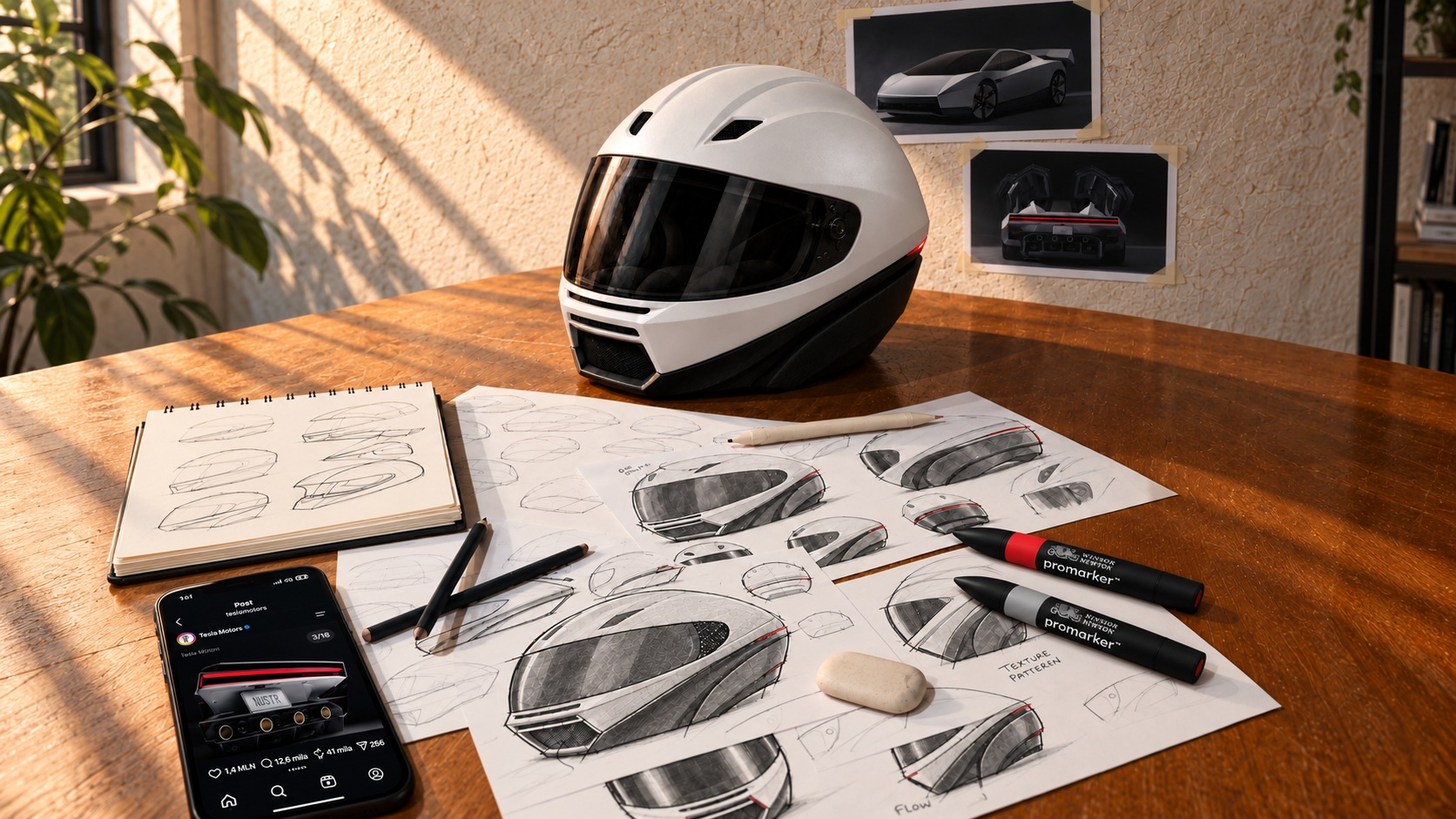
Translate the exploration into a coherent design language: the long crown channels, panoramic visor, diagonal jaw line and continuous rear light. A sketch-style synthesis brings the final proportions into one view.
AI-assisted sketch-style reconstruction of the final design. A synthesis of the form, rather than an original dated process drawing. Download the board ↓
THE SEARCH / NOT A STRAIGHT LINE
The rear projection became the key gesture: long enough to create movement, restrained enough to belong to the helmet.
01 / OPEN THE POSSIBILITIES
Explore the visor opening, crown volume and rear length through loose pencil alternatives. Construction lines help compare the same idea from different angles.
02 / EDIT THE PROPORTIONS
Compare shorter and longer rear projections. Let the swept side line flow into a thick, integrated rear nose rather than an added spoiler.
03 / MAKE THE HIERARCHY CLEAR
Grey marker separates the dark lower volume from the light shell. Red isolates the rear signature. The selected direction becomes easier to judge as a whole.
These supplied sketch-style boards illustrate the exploration and its design logic; AI-assisted reconstructions are presented as visual studies, not dated documentary evidence.
FROM LINE TO VOLUME
A clay-style study makes the transitions easier to discuss: crown into rear projection, visor into cheek band, and light shell into dark lower volume. These images illustrate a possible physical development stage.
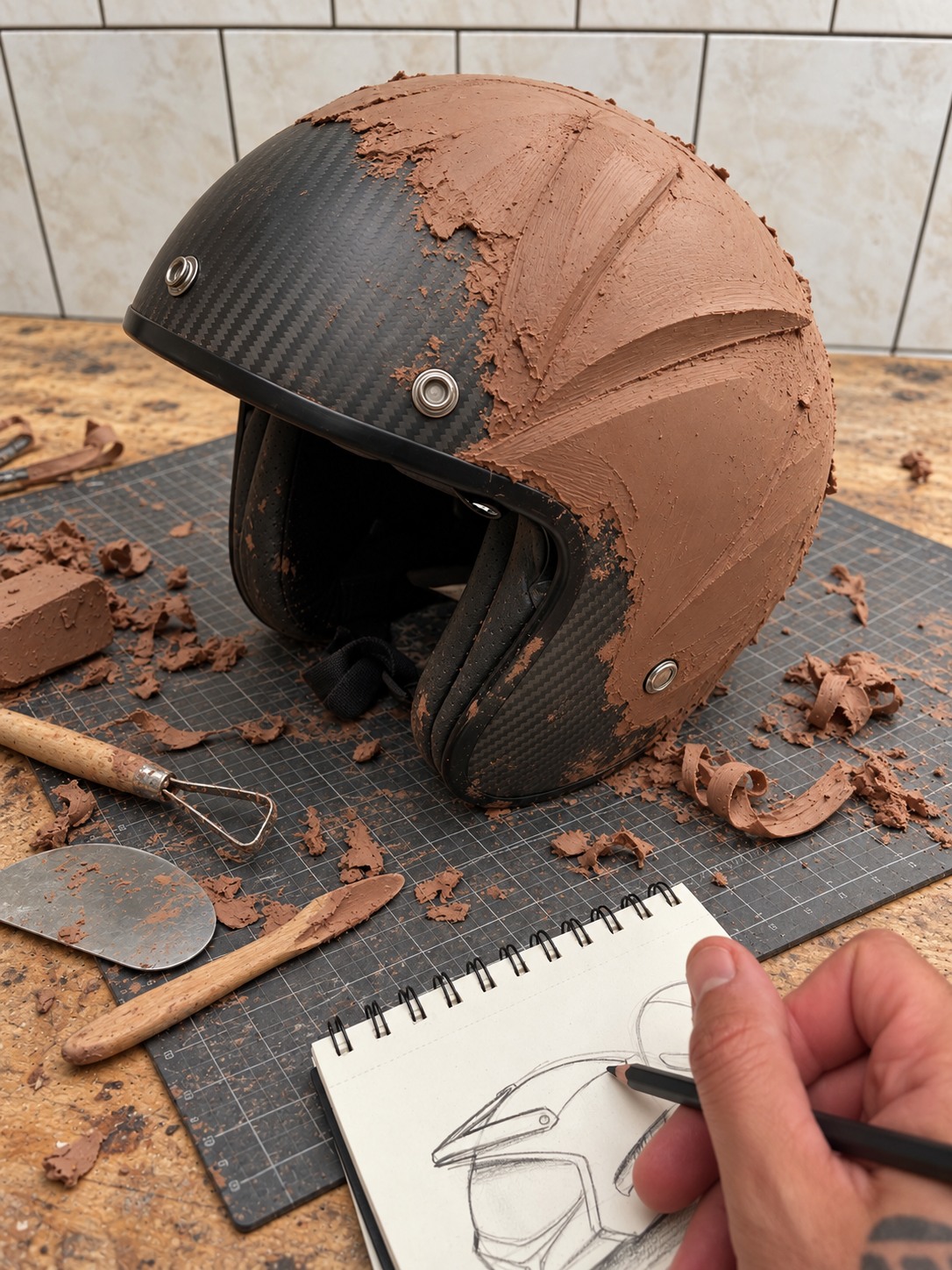
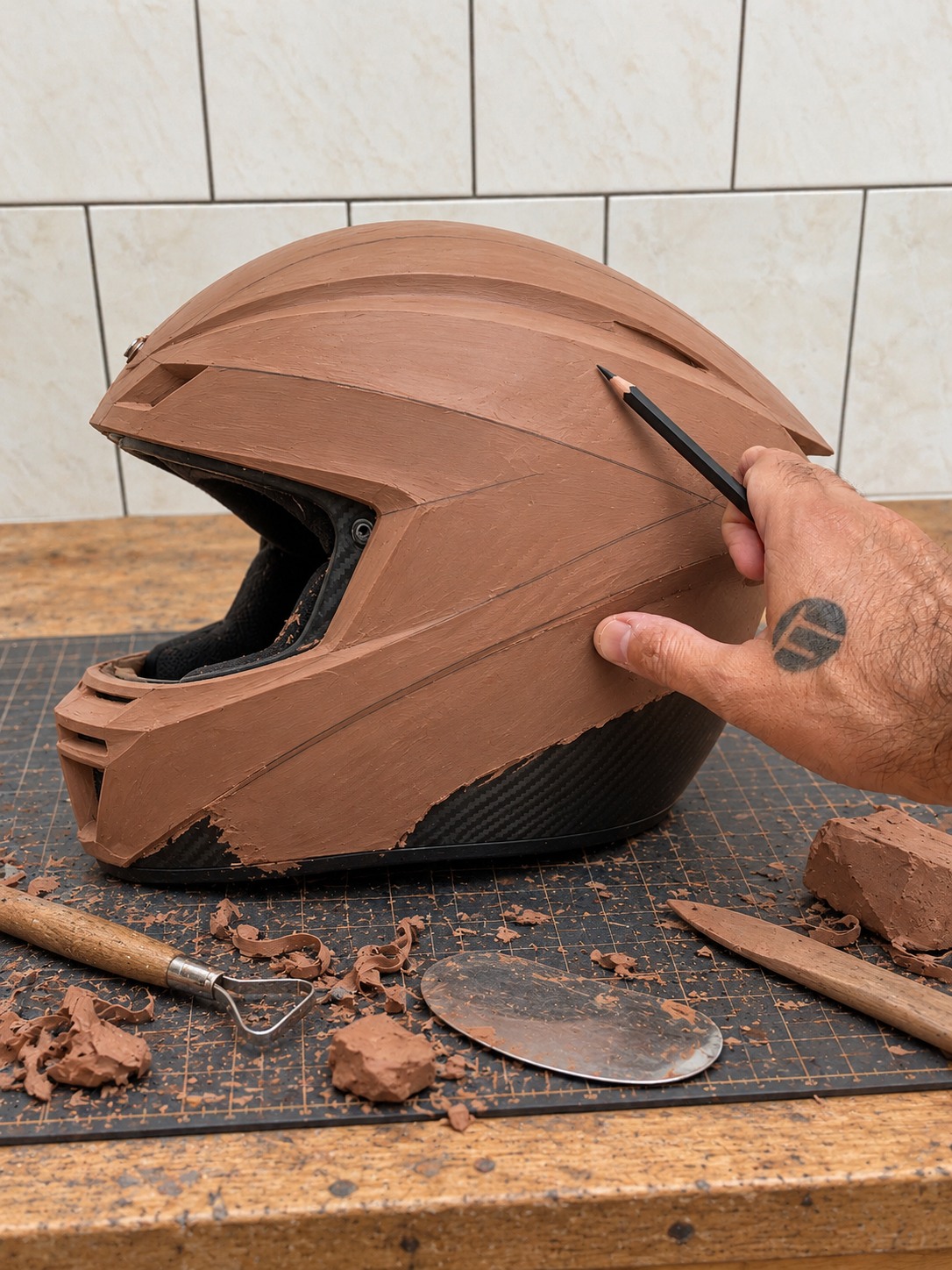
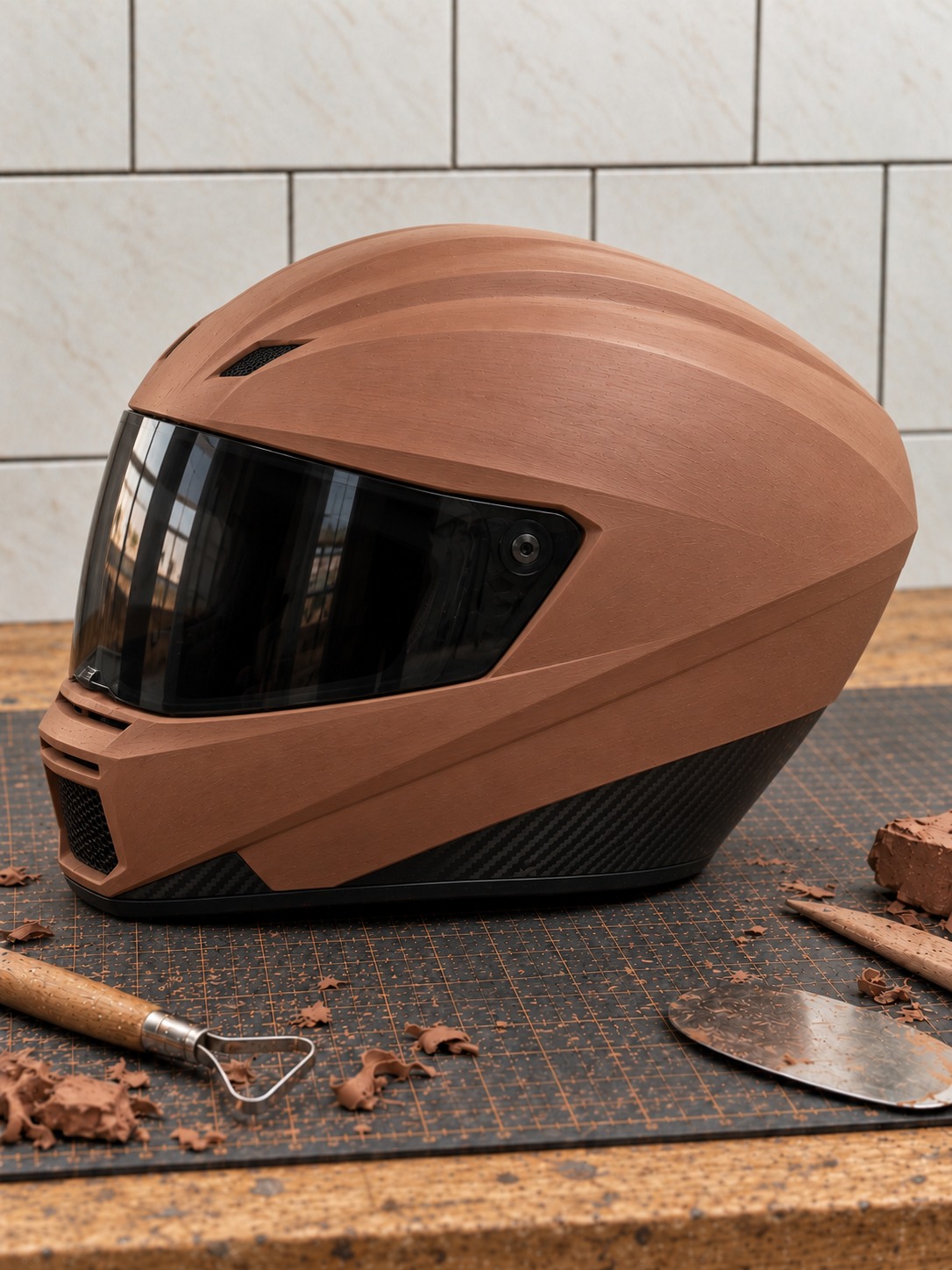
AI-assisted clay visualizations; not photographs documenting a manufactured prototype.
In Rhino, the sketch becomes a volume that can be examined from every angle. Two approaches — joined surfaces and SubD — offer different ways to shape the same intention.
The recordings below show the D8signer’s actual modelling studies, before the final visual treatment.
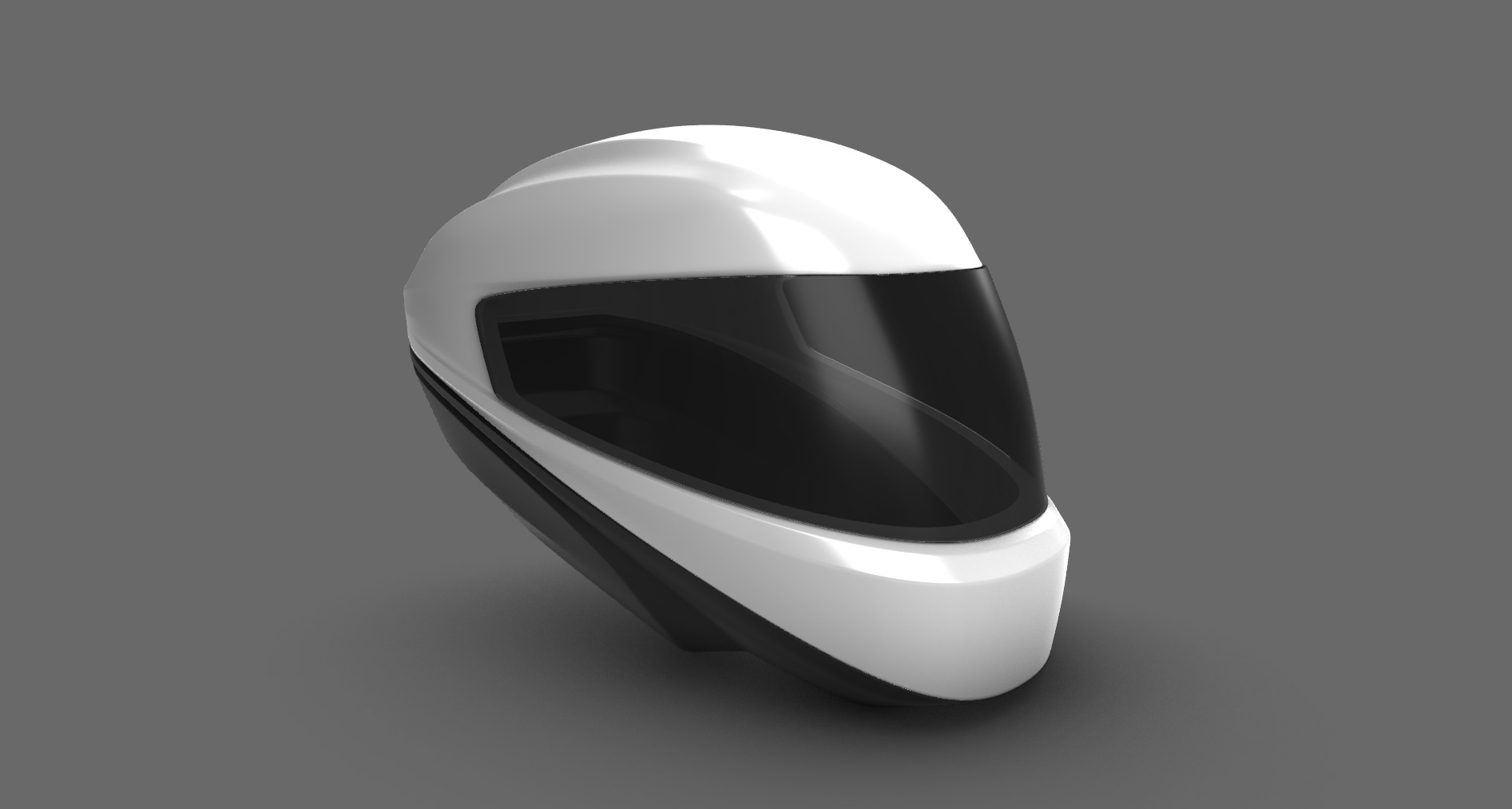
THE WORK, IN MOTION
Materials, seams, padding, ventilation and lighting make the intent easier to read. AI-assisted imagery helps explore that finish while the Rhino work remains the geometric foundation.
Final material and detail visualization, based on the D8signer’s Rhino geometry.
04 / WHY HJC?
A leading helmet brand
deserves a bold question.
HJC has built its reputation through decades of motorcycle helmet development. Its commitment to testing, research and design makes it a compelling brand to address with a future-facing exploration.1
My proposition is simple: bring that depth of experience into a conversation about tomorrow’s traveller. Use the ambition associated with Tesla’s visual world as a starting point — then give the helmet an identity of its own.
“What could HJC create
if the brief started
with the next horizon?”
Created independently as a portfolio proposal for HJC. No commission or partnership is implied.
DESIGN, IN DETAIL / THE VISUAL CONNECTION
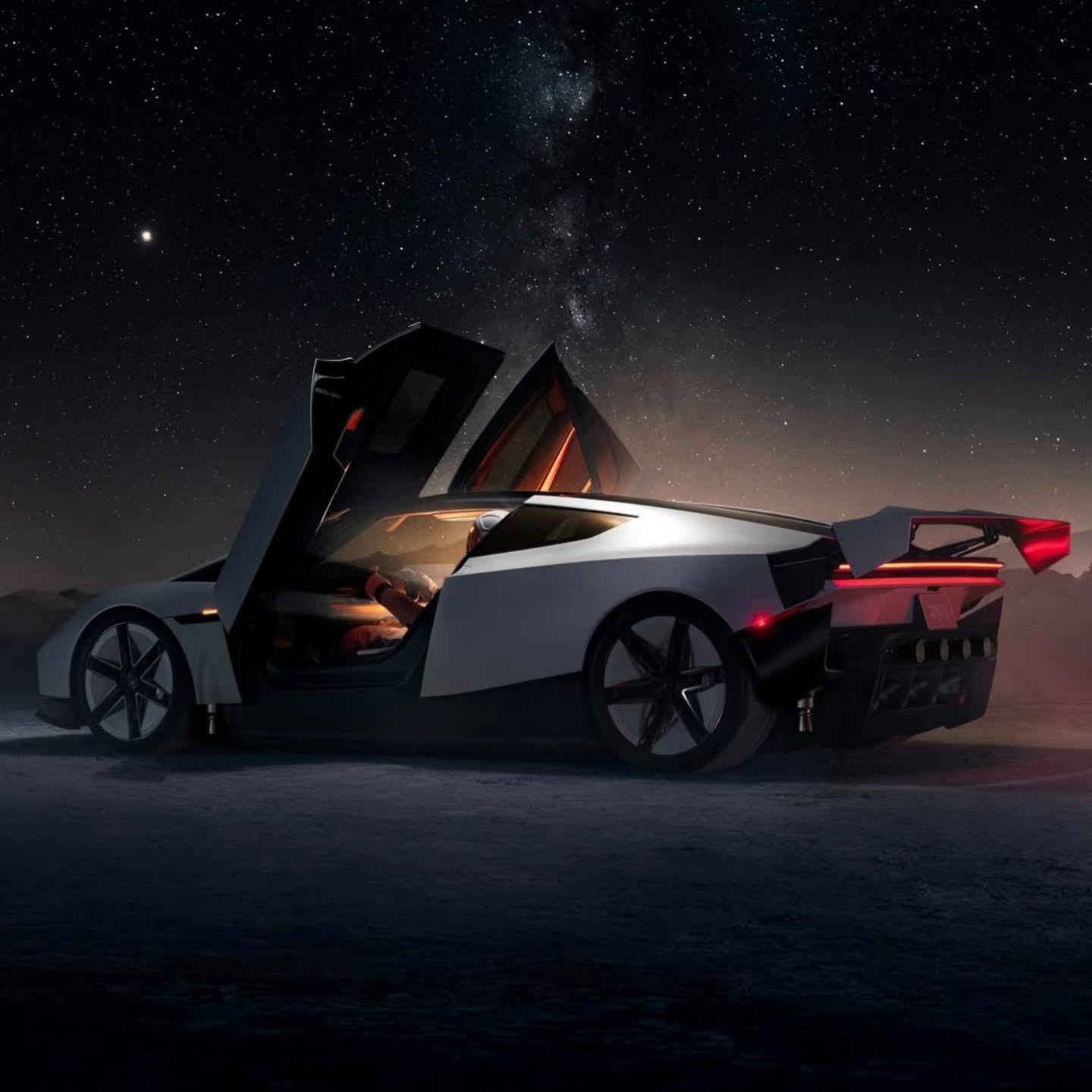
A red line. A sculpted shoulder. A quiet material contrast. Roadster references and helmet details meet in a shared visual language.
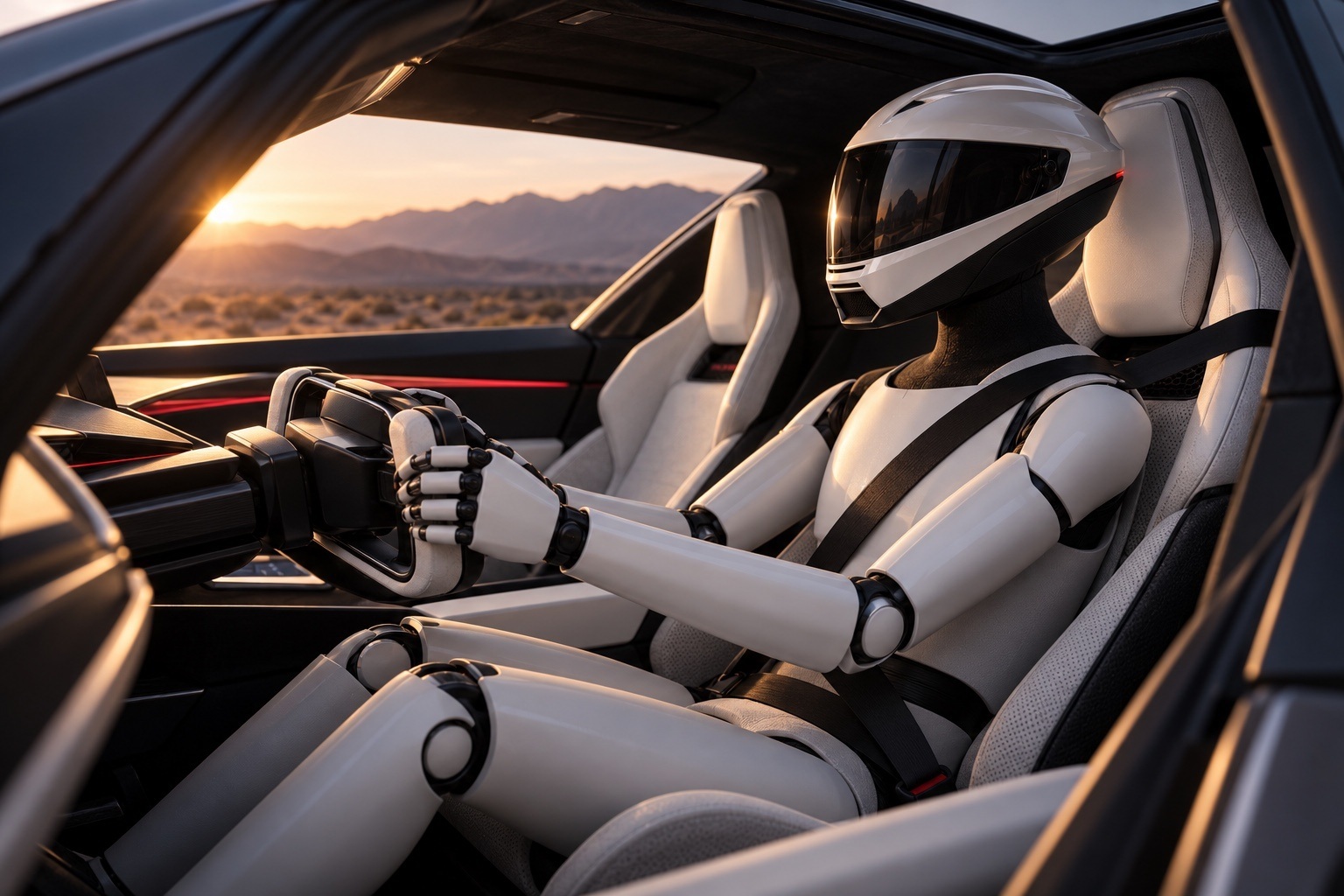
Select an image to look closer. Vehicle references supplied for the study; helmet close-ups and future-traveller scenes are AI-assisted design visualizations.
05 / THE NEXT HORIZON
Not a prediction.
An invitation to explore what comes next.
WHERE THE PROJECT STANDS
Developed: concept exploration, Rhino form studies, SubD and surface modelling explorations, and a visual product narrative.
Next to investigate: fit, mass, visor mechanics, ventilation, light integration, materials, impact behaviour and the applicable certification route.
Photorealistic imagery communicates design intent. It does not establish protection, comfort, anti-fog or aerodynamic performance.
THE D8SIGNER / D8SIGN.STUDIO
Industrial designer with 17 years of multidisciplinary experience. Working across research, concept development, 3D modelling and visual communication.
Based in France. Working in English, French and Italian.
I would love to discuss how this approach could contribute to HJC’s next projects.
Let’s talk ↗Explore D8Sign.studio ↗